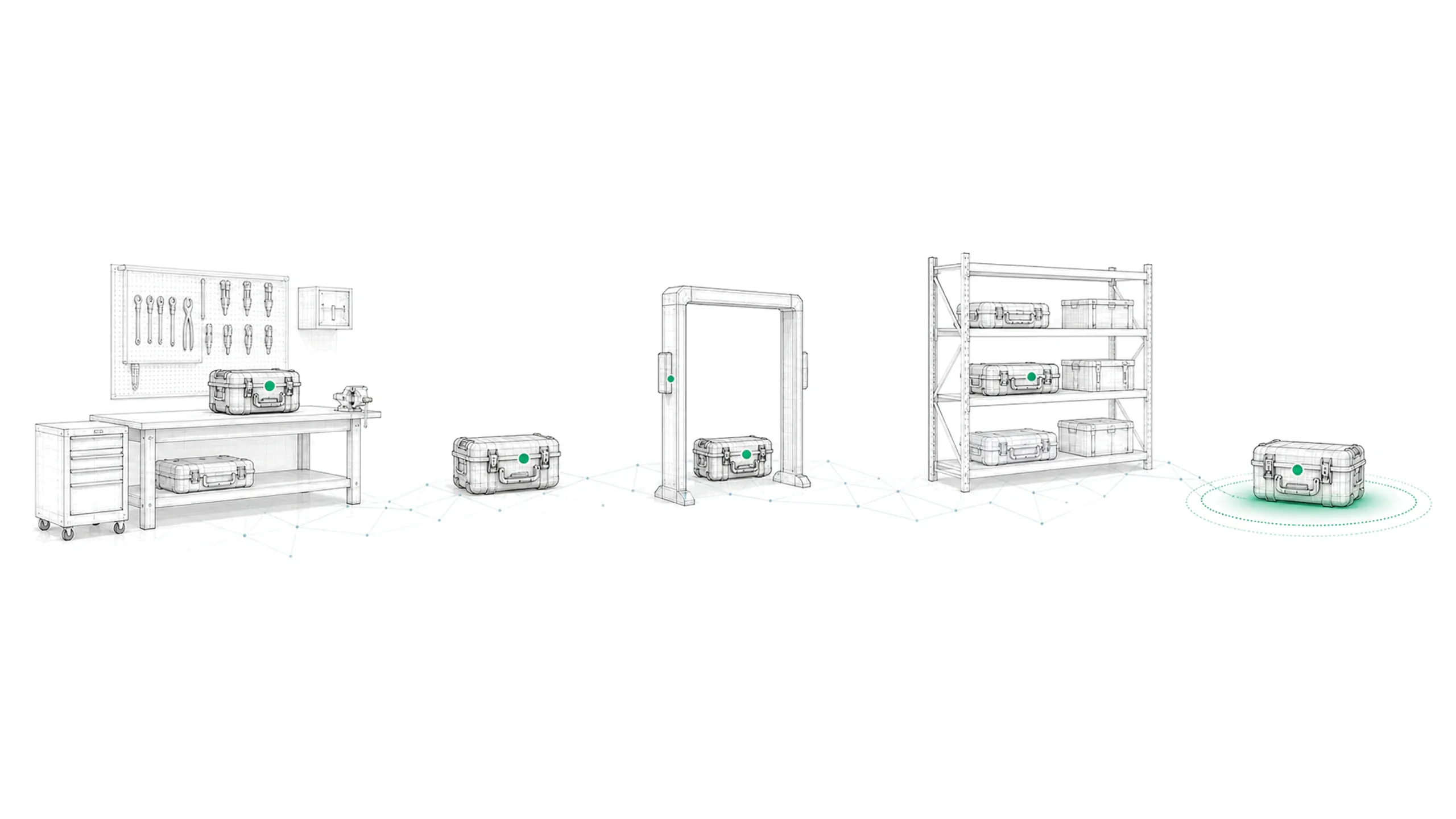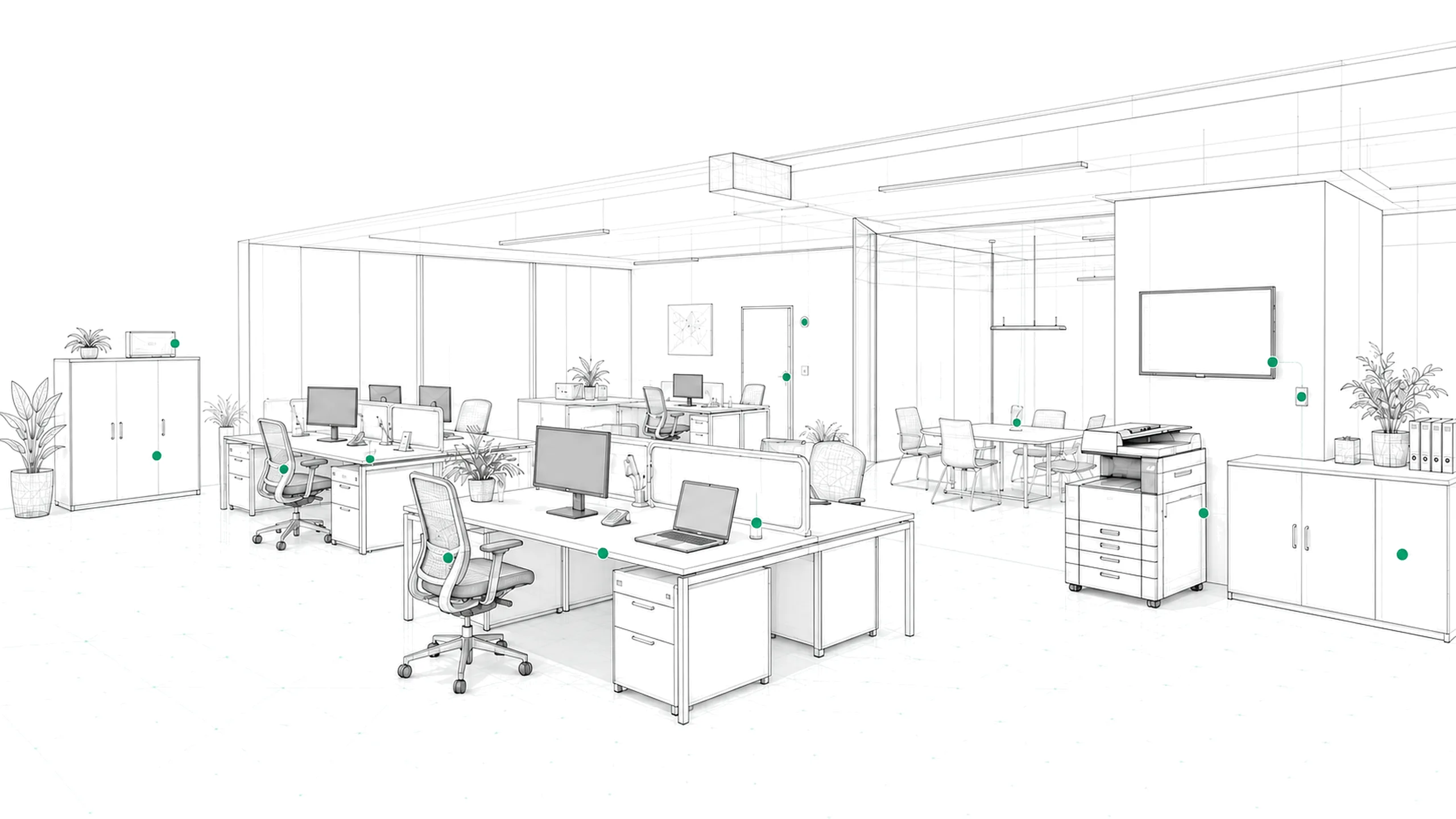
Real-time Visibility
Location and state of every asset in the moment, with RFID and IoT.
Brief
Trackvy for fixed assets keeps the location and state of every asset current, with audits and inspections by mobile reader, detailed reports and rule-based alerts. It runs on mobile RFID readers, fixed portals and area readers.
Initial tagging works with Zebra and Sato RFID printers and with Impinj, Zebra and Chainway readers.
App Features
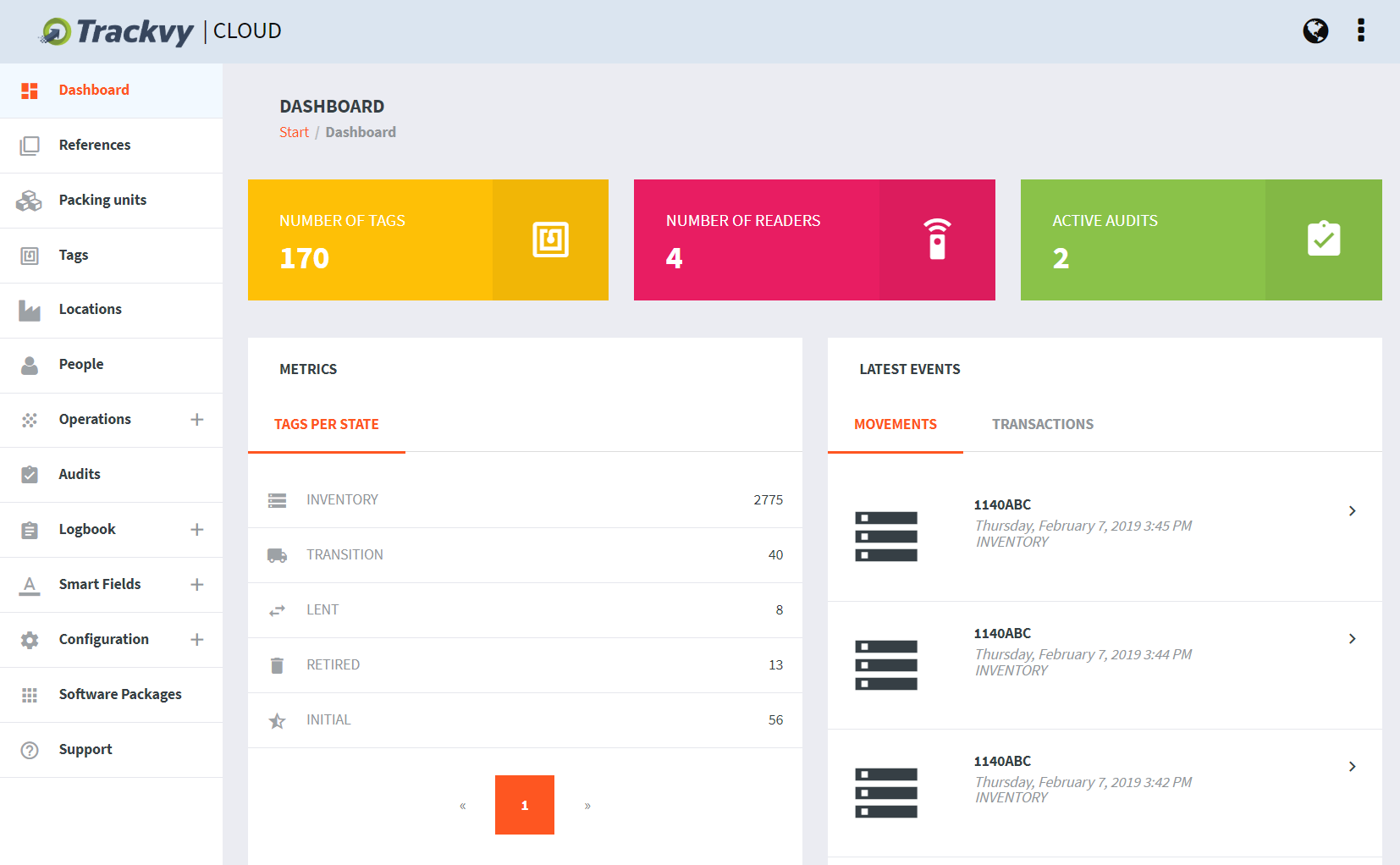
Every asset with a tag, a location and a history, on a single read.
Location and state of every asset in the moment, with RFID and IoT.
Rules and alerts configured to your operation.
Trackvy connects to your ERP and current systems over API.
Less manual counting and more precise data in every process.
How do we help?
A convergent IoT platform for track-and-trace using RFID, Bluetooth, LoRaWAN and cellular nodes. We pair commercial off-the-shelf devices with our platform to deliver reliable tracking and tracing across a range of industries.
Our platform records and logs all data received from the readers and tags, allowing you to perform audits, inspections, loans, and monitor sensor data like GPS location, temperature, and panic buttons.
Captured data is prepared and exported over API, ready for your ERP, your BI and your team's decisions.
Trackvy scales from dozens to millions of assets without architecture changes. Clients in Colombia manage portfolios of 5,000 to 200,000 fixed assets on the same instance.
Yes. Tag selection is part of the diagnostic. There are tags for metal surfaces, liquid-resistant tags and high-temperature tags, all rated for industrial use.
Yes. Trackvy exposes an open REST API and standard connectors for SAP, Oracle, and local systems. Integration is included in the project scope.
Trackvy supports both barcodes and RFID simultaneously. Migration can be gradual. Start with highest-value assets and expand based on ROI.
The prior diagnosis defines the scope, timeline, and concrete deliverables before work begins. The first measurable result arrives before scaling to the full project.
Accendo services
The platform records what happens. Tagging the assets, building the first inventory and sustaining the counts is field work, and Accendo provides it on the same operation.
Let's talk
We show you Trackvy on your own case: your assets, your inventories, your tools. From there you can judge whether it fits your operation.
Keep exploring